

Shipping Conex
Blog
Two 20ft Shipping Containers or One 40ft? How to Choose
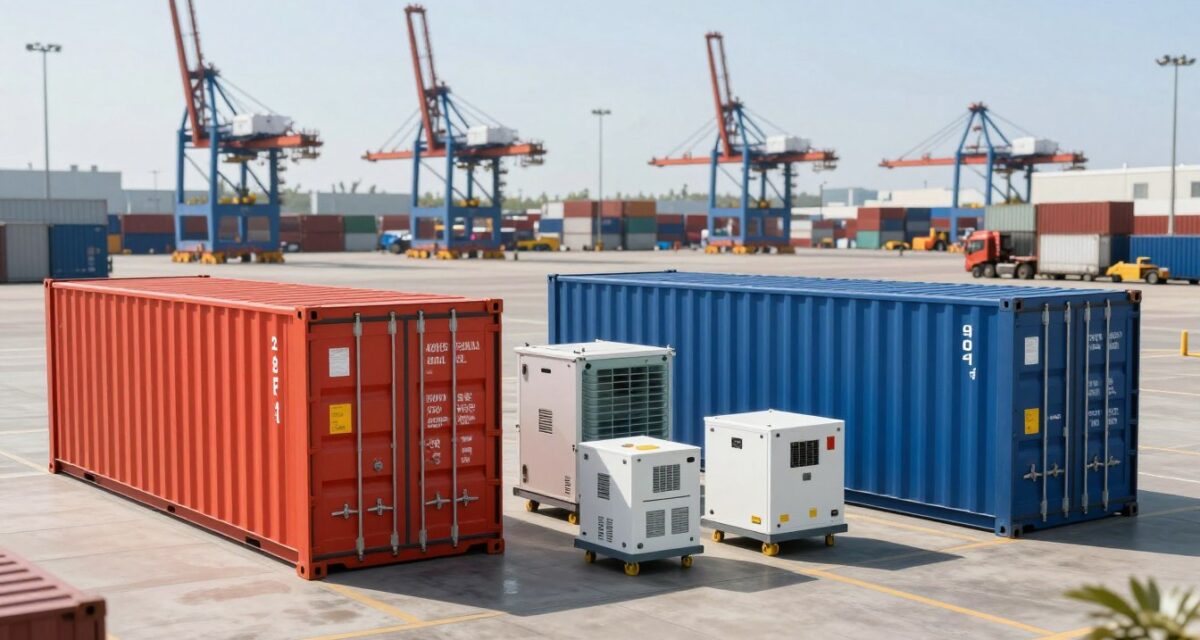
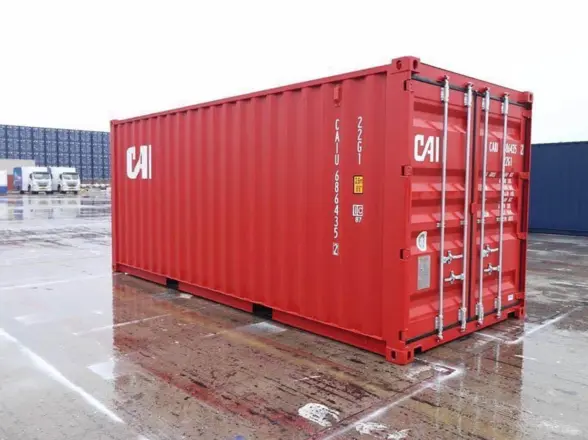
Choose one 40-foot container for one large, uninterrupted storage load, or two 20-foot containers when you need separate access or placement. The choice affects how you store goods, reach them, and use your space. How to choose shipping containers depends on your cargo, site, and intended use, not capacity alone.
One shared space can make sense for a long load or a single storage area. Separate units can keep goods at different locations or let you open one space without disturbing the other. Think about access as well as volume.
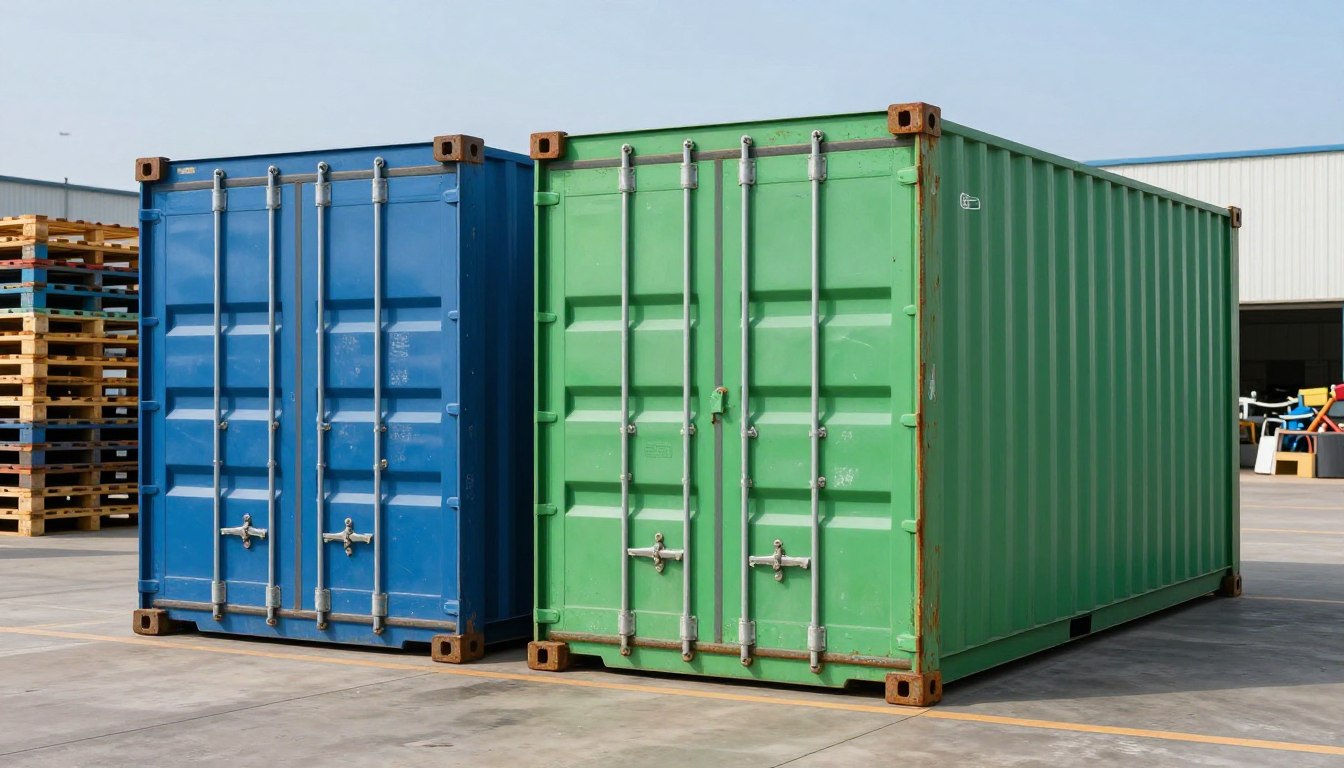
How to Choose Shipping Containers by Size
A 40-foot container provides double the capacity of a 20-foot unit, while two 20-foot units provide two separate storage spaces. Maximum payload is the cargo weight a container can carry after its empty weight is subtracted from its maximum gross weight.
One 40-foot unit is the straightforward choice for a single continuous load; two 20-foot units make separate placement and access possible. The best size also depends on your goods, loading method, and usable space at the site.
Choose one 40-foot unit for one continuous load, or two 20-foot units when separate placement or access matters.
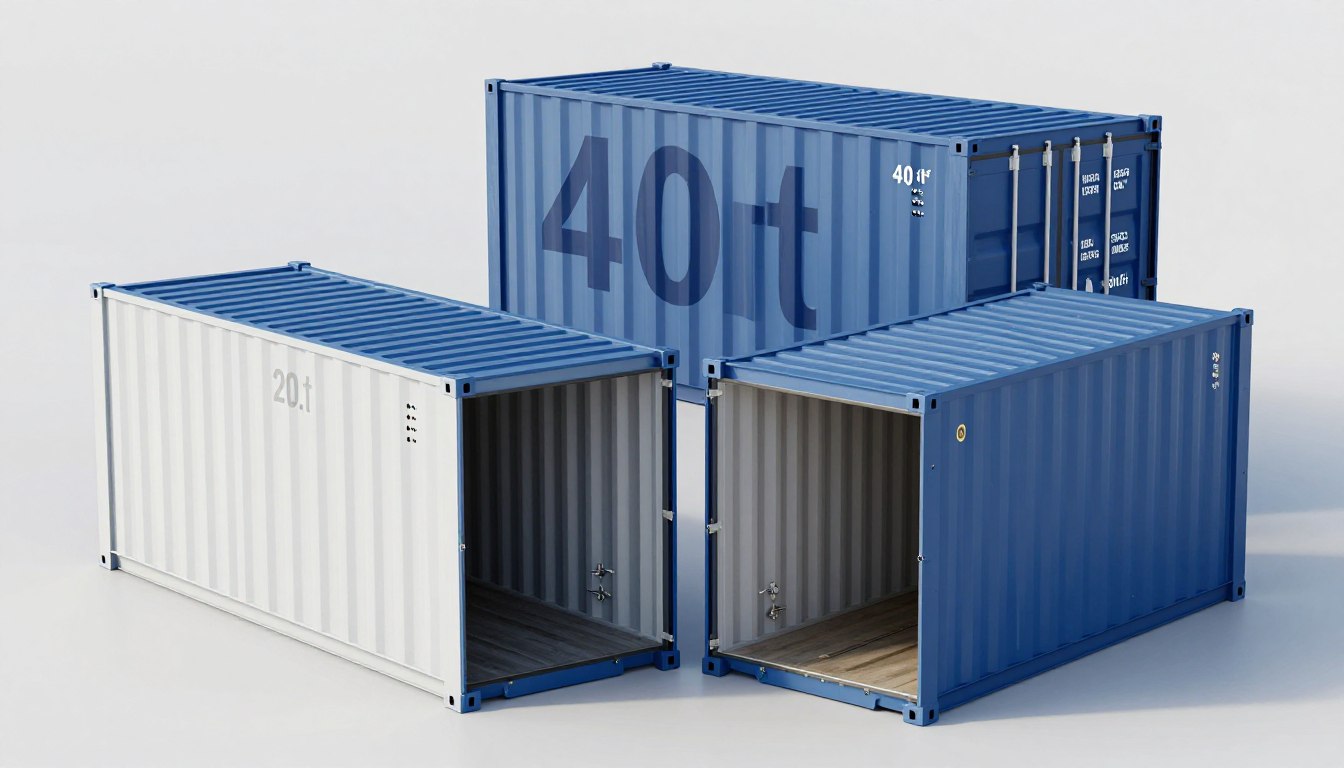
Compare the usable space in 20-foot and 40-foot units
Standard containers differ most in length and capacity. Their internal widths and heights are nearly the same, while the longer container has roughly twice the volume.
| Measure | 20-foot standard | 40-foot standard |
|---|---|---|
| Internal length | 19′ 4 1/4″ | 39′ 5″ |
| Internal width and height | 7′ 8 5/8″ wide; 7′ 10 1/4″ high | 7′ 8.5″ wide; 7′ 10″ high |
| Capacity | 1,172 cubic feet | 2,366 cubic feet, roughly 67 cubic meters |
| Maximum payload | 62,016 pounds | 58,935 pounds |
A 20-foot unit has a maximum gross weight of 67,197 pounds and an empty weight of 5,181 pounds. A 40-foot unit has a maximum gross weight of 67,200 pounds and an empty weight of 8,265 pounds. The 40-foot container adds volume, but its maximum payload is lower.
Match the layout to your storage and loading plan
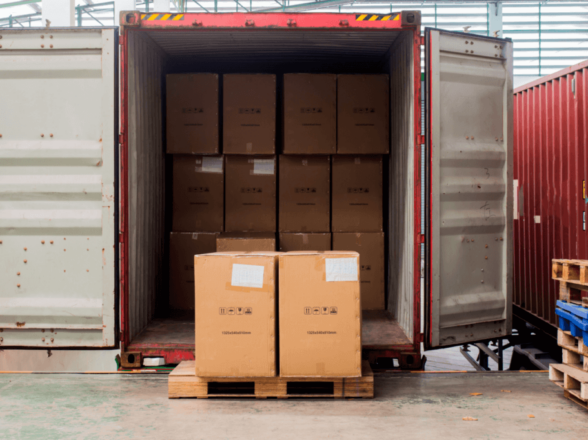
Typical loading fits around 10 standard pallets or 11 Euro pallets in a 20-foot container. A 40-foot container typically holds around 22 standard pallets or 24 Euro pallets. Actual counts depend on pallet size and how the load is arranged.
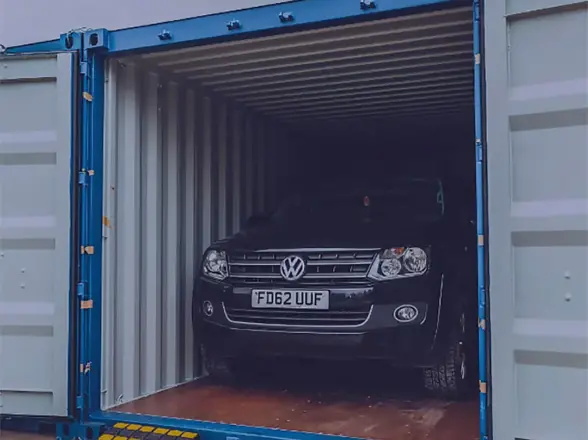
A 20-foot unit can suit a small or medium-sized vehicle, while a 40-foot unit can accommodate larger vehicles. External dimensions also affect placement: a standard 20-foot container measures 19′ 10.5″ long, 8′ wide, and 8′ 6″ high. A 40-foot unit measures 40′ long, 8′ wide, and 8′ 6″ high.
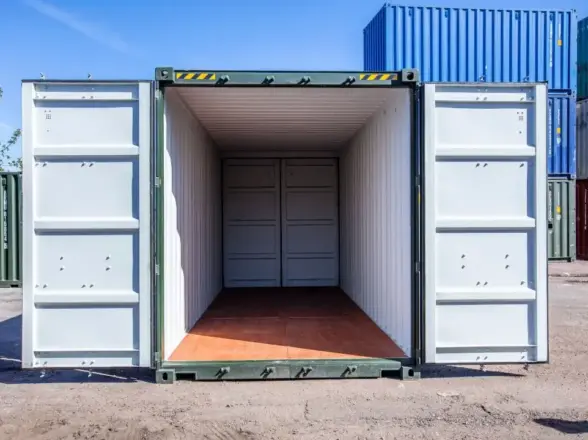
Door openings can restrict loading even when the cargo fits inside on paper. Measure your goods and confirm the container door opening before ordering. Measure the largest item and check that it can pass through the door before choosing by interior volume alone.
Which Container Type Fits Your Cargo?
A high-cube unit is the practical choice when the load needs more headroom, while a reefer is designed for temperature-sensitive goods. Standard dry containers suit general cargo, and specialty designs address specific loading or storage needs.
Choose a specialty container only when the cargo’s dimensions, temperature, or handling method calls for it. A high-cube container stands 9′ 6″ tall, compared with 8′ 6″ for a standard container.
Choose extra height or temperature control when needed
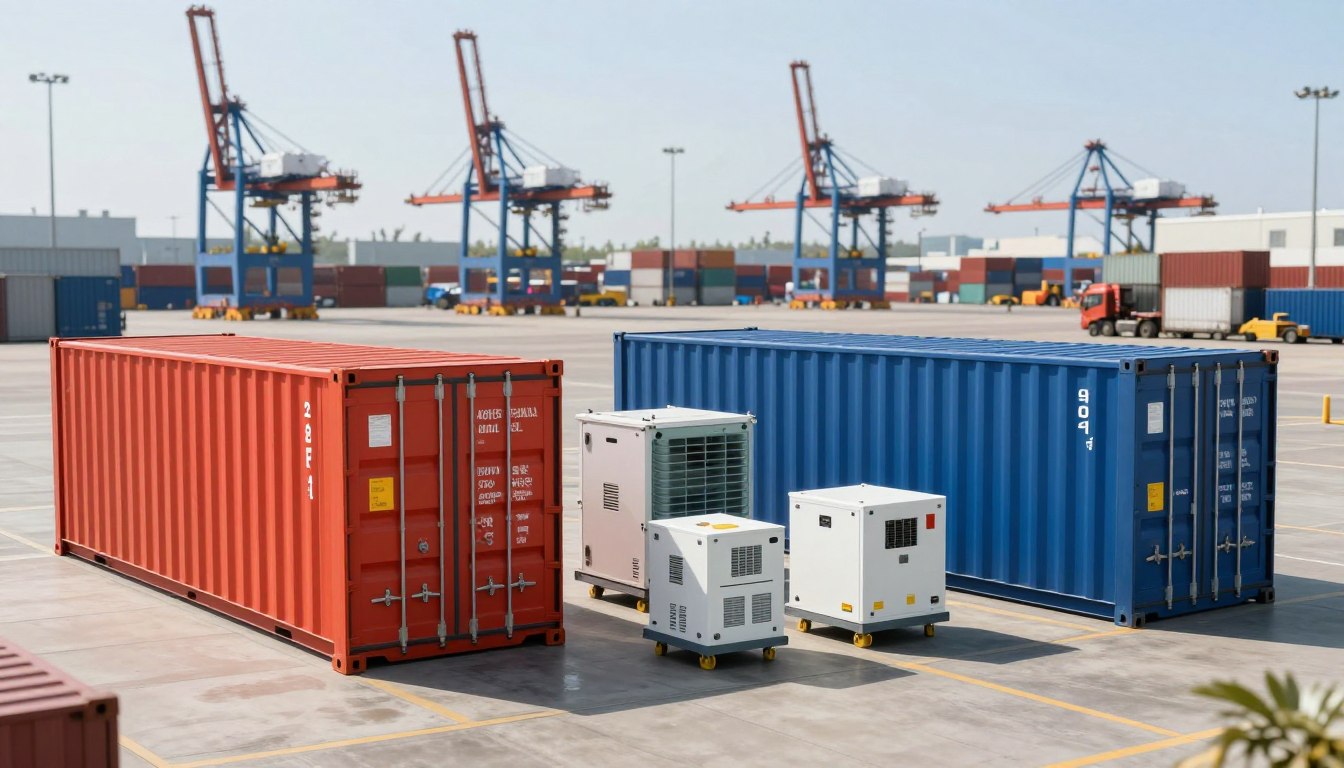
High cube containers provide added height for taller goods. Reefer containers use powered refrigeration for temperature-sensitive cargo and can control temperatures down to minus 30 degrees Celsius.
A 40-foot high-cube reefer has internal dimensions of 38′ 1/4″ long, 7′ 6 1/8″ wide, and 7′ 11 1/2″ high. Its capacity is 2,387 cubic feet, and its maximum payload is 65,212 pounds. It normally fits up to 23 EUR pallets, depending on pallet height, packaging, and layout.
A reefer needs power to maintain its set temperature during sea transport, at terminals, and during inland transport. That power need makes a temperature and operating plan part of the selection, not just a capacity check.
Use specialized designs for unusual loads or access
These five options match common cargo needs:
- High-cube containers provide extra height for tall cargo.
- Reefer containers hold temperature-sensitive goods at a set temperature.
- Open-top or hard-top containers allow overhead loading.
- Flat racks carry oversized cargo that will not fit inside standard walls.
- Ventilated, tank, or flexitank designs handle airflow needs or specialized liquid and gas cargo.
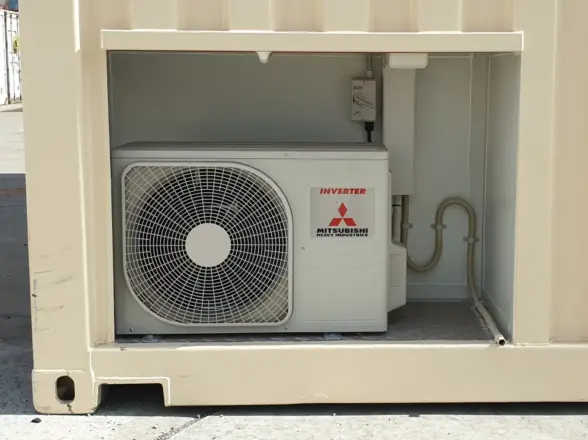
Double-door and side-door configurations can improve access to stored items. Insulation, ventilation, and shelving are possible modifications, but each change affects how you use the interior.
Confirm the cargo’s temperature, loading method, and required clearances before selecting a specialty design.
Compare Used Container Grades and Costs
For dry storage on a budget, a WWT unit is a common fit; choose CW when the container must remain certified for cargo transport. Wind-and-watertight (WWT) describes a weatherproof storage grade, while cargo-worthy (CW) units meet shipping requirements.
A WWT container is intended for weatherproof storage, not certified shipping. A one-trip unit has made one voyage, and an as-is unit may need repairs.
Choose a condition grade that suits the job
| Grade | Shipping eligibility | Typical use |
|---|---|---|
| One-trip | One voyage completed | Near-new storage or shipping |
| CW | Meets shipping requirements | Cargo transport |
| WWT | Not certified for shipping | Weatherproof storage |
| As-is | May need repairs | Use after condition review |
Used containers can show dents, rust, or wear without those signs alone proving structural failure. For international transport, the International Maritime Organization’s Convention for Safe Containers sets testing, inspection, approval, and maintenance requirements.
Compare the 2026 prices for used 20-foot units
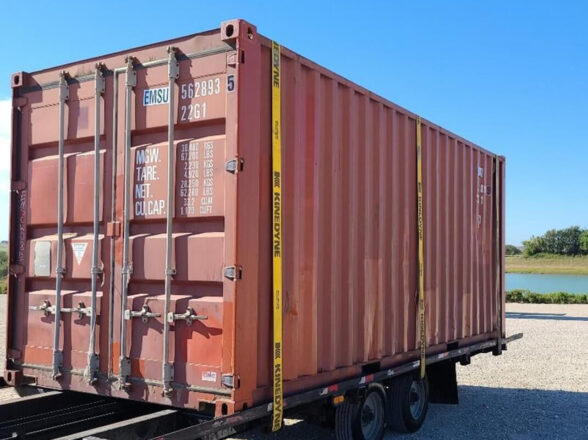
In 2026, used 20-foot CW containers cost $1,250-$1,800, while used 20-foot WWT containers cost $1,025-$1,750. These are purchase prices; delivery typically adds several hundred dollars, with the charge varying by distance and delivery method.
Inspect the roof and walls for holes or rust-through, test the door seals and operation, check the floor, and look for intact corner castings. Ask for an in-person inspection or clear condition photos, and confirm the grade matches the way you will use the unit.
Prepare the Delivery Site and Foundation
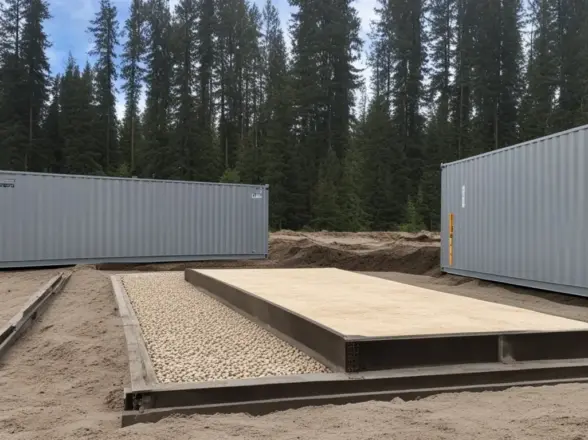
Plan the delivery route and the support beneath the container together, since a clear truck approach does not guarantee stable ground. Dry, firm ground helps limit water pooling and uneven settling.
The support must suit both the ground and the loads the container will carry. Concrete is not automatically required, but the foundation must spread the weight over soil that can support it.
Check placement and truck access
Use this four-point site checklist before arranging delivery:
- Choose a level, firm placement area.
- Keep the ground dry and provide drainage.
- Confirm the truck’s approach and unloading access.
- Discuss overhead or side obstructions with the delivery operator.
Delivery typically adds several hundred dollars to the container’s purchase price in 2026. Distance and delivery method affect the charge, so confirm the route and unloading approach with the operator.
Support the container on suitable ground
A foundation should distribute the structure’s weight over ground capable of supporting it. Soil capacity depends on density, cohesion, organic matter, moisture, and friction angle. Presumptive soil-bearing values should be divided by a safety factor between two and three, based on confidence in the soil classification.
Suitable support helps prevent settling-related problems. Ask a qualified professional to assess the site when soil conditions or building loads are uncertain, since a simple visual check cannot establish soil capacity.
Local property-tax treatment depends on the jurisdiction and how the installation is classified. Check with the county assessor before placing the container. Confirm access, placement, drainage, and local tax treatment before scheduling delivery.
Account for Modifications and Safety
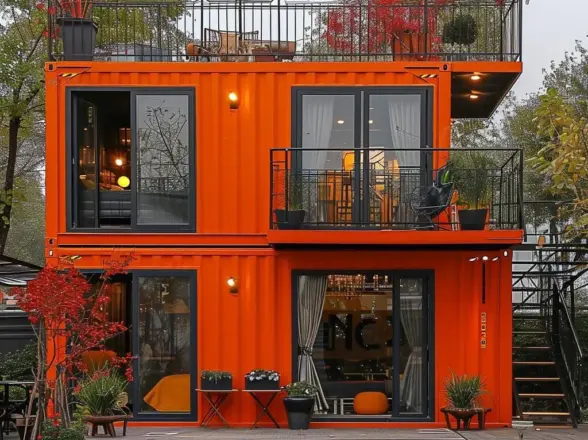
Treat any container-home conversion or shelter project as a structural design, not a simple storage-box modification. Large cutouts for doors, windows, or roof openings can weaken the container shell.
Structural changes, connections, and foundations need engineering review before construction. Check which building-code edition your jurisdiction has adopted, since local rules may not follow the 2021 IRC.
Plan structural changes and code review
The 2021 International Residential Code, Section R301.1.4, directs intermodal shipping-container structures to comply with International Building Code Section 3115. Jurisdictions may not have adopted the 2021 IRC edition.
IBC Section 3115 calls for a licensed professional engineer to analyze changes such as door and window openings, wall removal, and roof penetrations. Foundations must account for concentrated corner loads, while connections between containers must transfer loads and provide structural continuity.
Insulation and interior finishes can also change the space available for goods. Plan each modification around its effect on the shell and intended use, rather than treating a container as a ready-made building frame.
Treat storm protection and burial as engineered projects
A bare container is not a tornado safe room. Its walls, roof, doors, foundation, fasteners, anchoring, and impact-rated openings must work as one protective system.
FEMA P-361 safe rooms are designed for near-absolute protection, while ICC 500 sets minimum requirements for storm shelters. FEMA P-361 and ICC 500 describe distinct safety benchmarks, not a claim that an unmodified box provides shelter protection.
Do not treat a bare container as a tornado safe room or bury it without engineered support.
Container walls are not designed to resist horizontal earth loads. Burial needs engineered structural support against soil pressure, drainage, and foundation design.
Have a licensed professional engineer review the design and confirm local code requirements before cutting, connecting, anchoring, or burying a unit.
Conclusion
Your best choice is the unit that fits both the cargo and the way you need to access it. One 40-foot container suits one continuous large load; two 20-foot units work when independent placement or access matters.
Choose a specialized design only when your cargo requires added height, temperature control, or a different loading method. For general storage, a standard unit may meet the need without added features.
Measure the goods and delivery site, then confirm the selected grade and delivery arrangements with the seller. Measure the load and site, then confirm the unit’s condition and delivery plan before ordering.
FAQ
What are the different types of shipping containers?
Common types include standard dry containers for general cargo and high-cube containers for taller goods. Reefer containers control temperature for sensitive cargo. Open-top containers allow overhead loading, and flat racks carry oversized loads. Ventilated containers support airflow, while tank containers and flexitanks handle specialized liquid or gas cargo. Choose based on the goods and loading method.
What are the downsides of a shipping container house?

A shipping container house can require structural reinforcement after you cut openings for doors or windows. You also need to plan insulation and moisture management to limit condensation. The foundation must suit the site and building loads, and local code review may apply. These needs can add design work beyond placing an unmodified container for storage.
How much should I pay for a 20 ft shipping container?
In 2026, a used 20-foot CW container typically costs $1,250-$1,800, while a used 20-foot WWT unit costs $1,025-$1,750. Those figures cover the container, not delivery. Delivery typically adds several hundred dollars, with the amount depending on distance and delivery method. Compare the grade with your intended use before judging the price.
Can two cars fit in a 20ft container?
Generally, two full-size cars will not fit in a 20-foot container. Its standard interior is 19′ 4 1/4″ long and 7′ 8 5/8″ wide, leaving too little length for most pairs of cars. Vehicle dimensions, mirrors, and the door opening also affect fit. Measure both vehicles and check clearances before planning transport or storage.
Can a tornado pick up a 20 ft shipping container?
Wind can move an unsecured container, so a 20-foot unit should not be treated as a tornado safe room. Shelter protection depends on engineered anchoring and a complete impact-resistant design, including the walls, roof, doors, foundation, and openings. A bare container does not provide that system. Use a purpose-designed safe room or storm shelter for life safety.
Do you need a concrete slab for a shipping container?
No, a concrete slab is not always required. The support must be level and spread the container’s load over ground that can carry it. Soil conditions and the structure’s loads determine what foundation is suitable. If you are unsure about soil capacity or building loads, get a professional assessment before placing the container.
At Shipping Conex – Official Affiliate of Used Conex LLC, you can request a FREE quote today and discover the endless possibilities shipping containers offer for your storage needs. Simply complete our quick online form to take the first step toward transforming clutter into a secure, organized, and efficient storage solution.