

Shipping Conex
Blog
Painting a Shipping Container: Costs, Prep, and Is It Worth It?
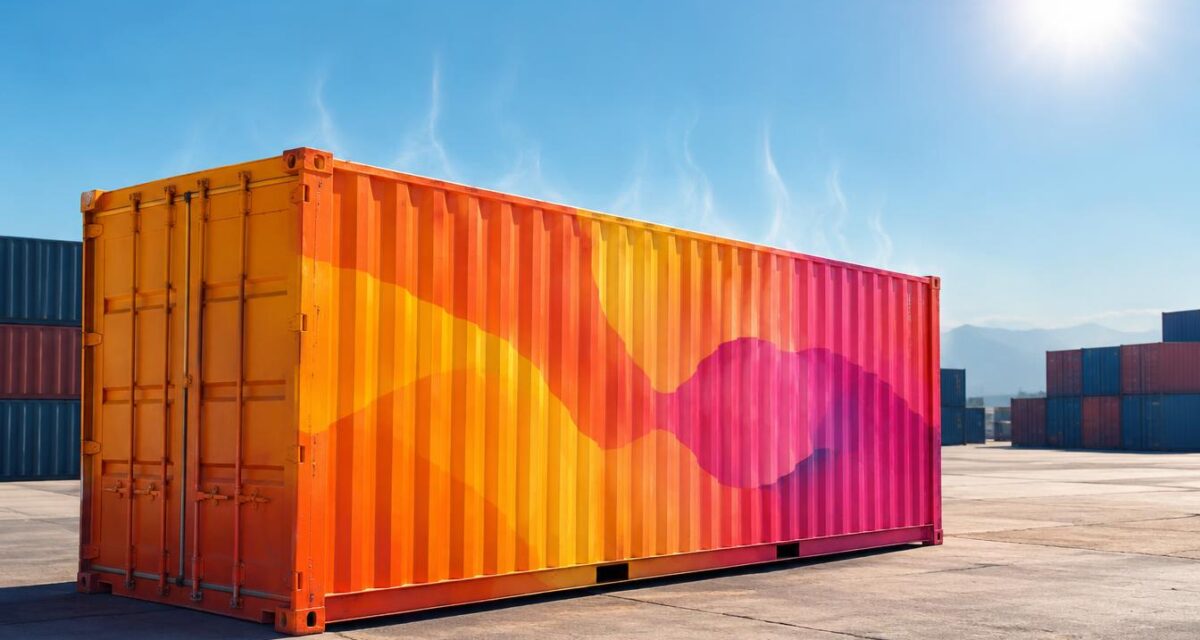
Repainting is usually worthwhile when your container’s finish is failing or you need a fresh look, provided you prepare the steel and choose paint made for exterior metal. A direct-to-metal (DTM) coating is formulated to adhere to prepared metal without a separate primer across the entire surface, though bare or rusted areas may still need rust-inhibitive primer.
Weather, time, and protection all affect the result. If the container still has sound steel, a careful repaint can help preserve its finish and improve its appearance. Preparation matters: even suitable paint can fail over dirt, rust, or loose coating.
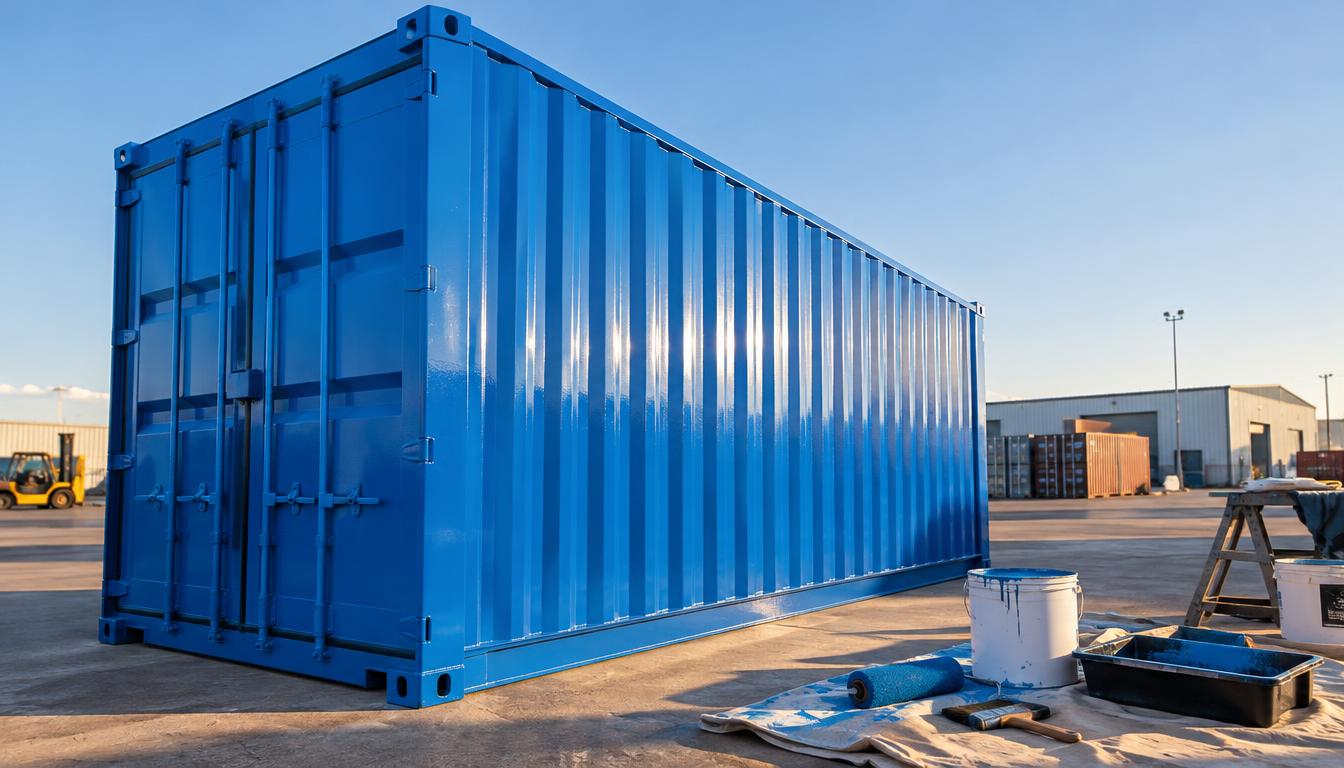
A DIY project takes more than applying paint. You also need to inspect the steel and allow the coating to dry and cure before the container returns to use. Treat a peeling or rusty finish as a reason to inspect the steel before deciding how much work the repaint needs.
Is Painting a Shipping Container Worth the Cost?
Repainting is most compelling when the container is worth protecting and its coating needs attention, rather than when the steel is already in poor condition. Condition first: a sound structure can benefit from maintenance, while deep corrosion may call for repairs beyond paint.
Prices depend on size and condition, and delivery adds a separate charge. A used wind-and-watertight container usually costs less than a new one-trip container. In the United States in 2026, a 20-foot container measures 20 feet long, 8 feet wide, and 8 feet 6 inches high externally.
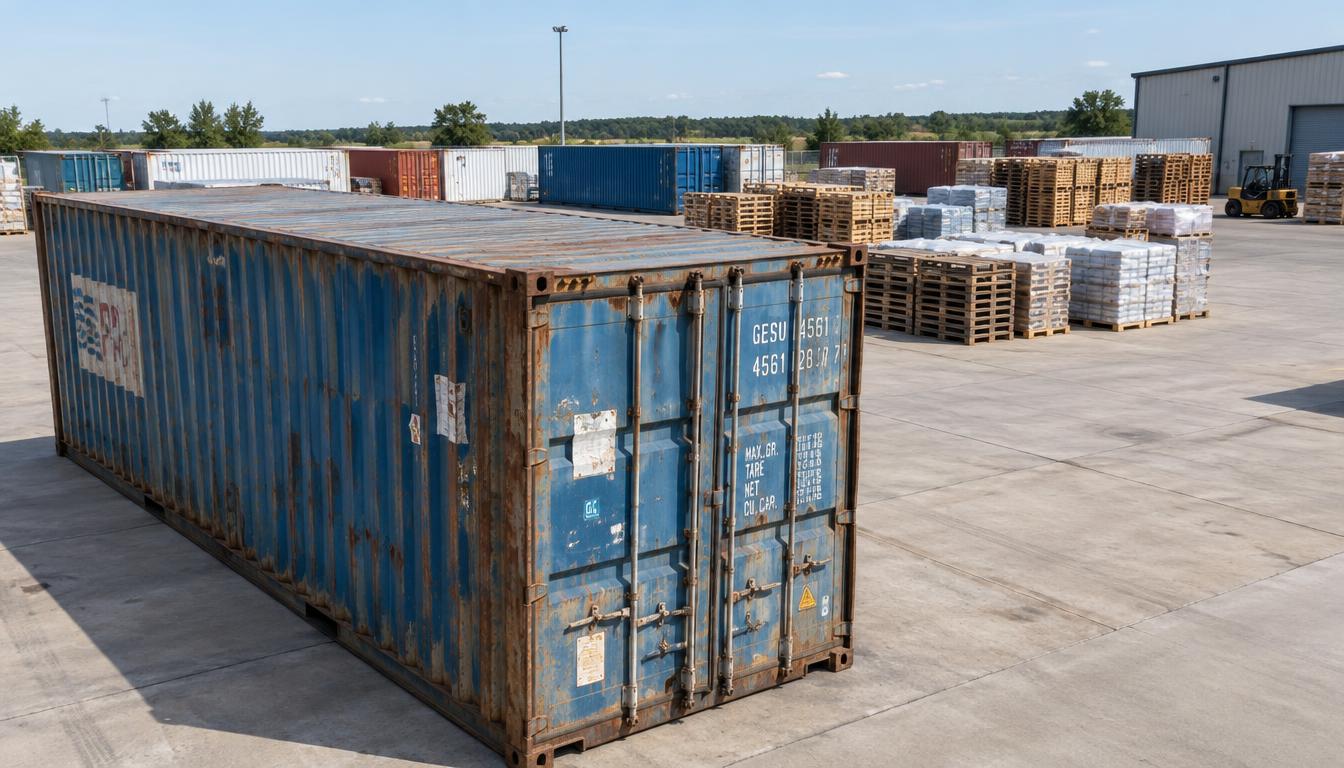
Container purchase prices and delivery in 2026
A 20-foot high-cube container typically costs $300-$600 more than a standard-height version. A 40-foot high-cube typically adds $200-$600 to the equivalent standard-height price.
| Size and condition | Container price | Delivery fee |
|---|---|---|
| 20-foot, used wind-and-watertight | $1,200-$2,000 | $350-$2,000 or more |
| 20-foot, new one-trip | $2,500-$5,500 | $350-$2,000 or more |
| 40-foot, used wind-and-watertight | $2,200-$3,200 | $225-$800+ |
| 40-foot, new one-trip | $4,500-$6,800 | $225-$800+ |
The broader 2026 price range is $1,200-$5,500 for a 20-foot container, while a 40-foot container costs $2,200-$6,800 depending on condition, type, and location. A 40-foot delivery truck needs about 100 feet of straight clearance to slide the container off its trailer.
Service life and upkeep costs
A container structure on land typically lasts 25 years or more, depending on climate, initial condition, and maintenance. Containers in ocean service usually work for about 10-15 years before retirement from shipping. The container-building durability discussion describes rust-resistant Corten steel and its potential to retain structural strength.
In coastal or high-humidity settings, a full repaint every 5-10 years can extend container life. Marine-grade paint costs about $50 per quart, with the total depending on container size. Annual DIY treatment of surface rust with converter and paint typically costs less than $100 in materials.
Inspect the steel before investing in a repaint, since severe corrosion can require more than a new coating.
Check the delivery truck’s access before comparing delivered container prices.
Choose Paint for the Container’s Exposure
For most owners, a direct-to-metal acrylic made for exterior metal is the practical starting point, while epoxy and polyurethane suit more specific needs. Use epoxy outdoors only beneath a UV-stable topcoat, since sunlight can make epoxy chalk.
Acrylics are easy to apply, dry quickly, and offer good to very good durability with very good UV resistance. The right finish also depends on the container’s exposure, appearance, and need for gloss retention.
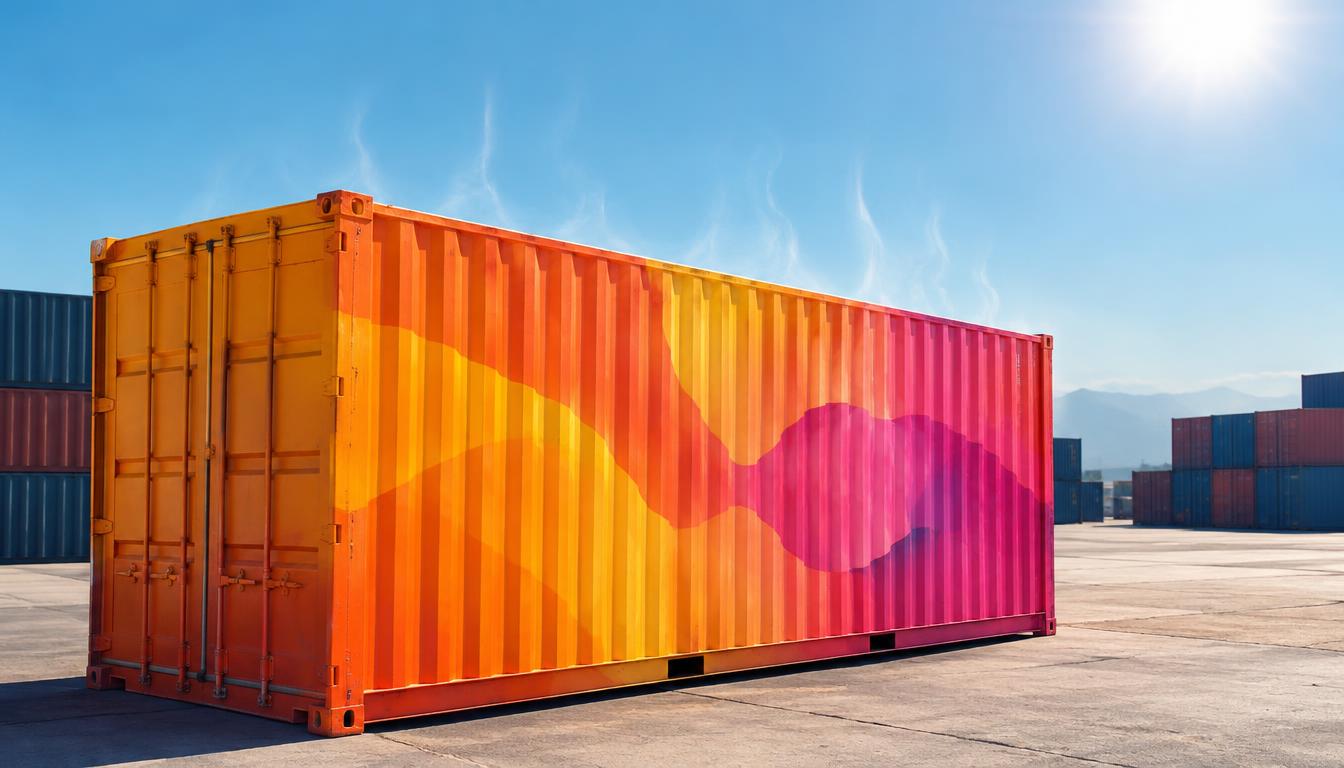
Acrylic, epoxy, and polyurethane coatings
| Coating type | Suitable use | UV behavior | Application trade-off |
|---|---|---|---|
| Direct-to-metal acrylic | Most exterior container repaints | Very good resistance | Easy to apply and fast-drying |
| Epoxy | Primer or intermediate coat | Can chalk in sunlight | Needs a UV-stable outdoor topcoat |
| Polyurethane | High gloss and color retention | Excellent resistance | Usually costlier and harder to apply |
Polyurethane fits jobs where its strong UV, color, and gloss retention justify the extra cost and application difficulty. A shipping container’s factory coating system typically has a zinc-rich primer, an epoxy intermediate coat, and an acrylic or polyurethane topcoat.
Color, primer, and heat considerations
Painting ideas for a shipping container can include a brand color, a neutral match for the site, or a light roof in a sunny location. A dark container in direct summer sun absorbs significantly more heat than a white or light-colored one, and a light roof can reduce interior temperatures.
Sherwin-Williams offers shipping-container coatings for dry-goods and refrigerated containers, designed to help applicators lower applied costs and meet VOC requirements. Container One’s water-based DTM acrylic is intended for interior and exterior use; it is chemical-resistant, corrosion-resistant, fast-drying, and resistant to early flash rust.
Pen-Rust Marine Enamel is a gloss coating for interior and exterior steel that fights rust, and its listed colors include Hull Gray. Custom colors are available, but screen colors may differ from the applied paint. Check shipping container paint colors against a physical sample.
Listed metal primer colors include Red Oxide, Gray Oxide, Zinc Chromate, and Zinc Molybate. Bare or rusted steel needs rust-inhibitive primer. Marine-grade paint for shipping containers is an option, not one single coating formula. If color accuracy matters, compare a physical sample with the container in its actual light.
Clean, Repair, and Prime the Surface
Start by inspecting the whole surface, since paint will not adhere well over dirt, oil, loose coating, or rust. Look closely for peeling paint, grease, and salt before choosing how much repair each area needs.
Pressure-wash the exterior and let the steel dry completely before painting. Washing removes grime, but moisture left behind can cause later paint failure. A DTM primer belongs on exposed metal and welds; it does not replace full-surface preparation.
Wash away dirt and let the steel dry
Check the container from the roofline down, including corners and door panels. Dirt can hide small areas of damage, while oil or salt can interfere with the coating even when the steel looks clean.
Pressure-wash the outside, then give every surface enough time to dry thoroughly. Pay attention to seams and sheltered areas, where water may linger after exposed panels look dry.
Remove rust and protect vulnerable details
Remove labels and stickers, then use a wire brush or suitable abrasive to clear loose coating and rust. A rust converter can treat deeper spots before you prime them.
Apply direct-to-metal primer to bare steel and welds, then use corrosion-resistant primer over the rest of the surface as needed. Caulk gaps and openings to help keep moisture out.
Mask locks, hinges, vents, door hardware, and any other fixtures that should stay unpainted. Sandblasting can remove protective marine-grade layers and requires specialized equipment, so it is not a routine shortcut for home preparation.
Make sure the steel is fully dry before covering it with primer or paint.
How Much Paint Do 20- and 40-Foot Containers Need?
For the specified direct-to-metal acrylic coating, one coat takes 3 gallons on a 20-foot container or 5 gallons on a 40-foot container. Those estimates cover one coat, while the recommended finished application uses two coats.
A 40-foot container takes 5 gallons for one coat of this coating. Double that amount for the recommended two-coat finish, then check the chosen product’s label if you use a different formula.
Coverage for a 20-foot container
One coat on a 20-foot container takes 3 gallons of this direct-to-metal acrylic. The recommended finish uses two coats, so plan for 6 gallons in total.
This coverage estimate applies to the specified coating, not every paint or primer. The amount needed for a different product can change with its coverage rate and the surface being coated.
Coverage for a 40-foot container
One coat on a 40-foot container takes 5 gallons of this coating. The recommended two-coat finish therefore calls for 10 gallons. The one-coat figure answers the common quantity question directly, while the second coat completes the recommended finish.
A 20-liter paint quantity for a shipping container equals about 5.3 U.S. gallons. That is close to one coat’s estimate for a 40-foot container, but product coverage rates can differ. Read the label rather than assuming every 20-liter pail covers the same area.
Check the coating label for its coverage rate before buying paint for a different product.
Apply the Coating With the Right Tool
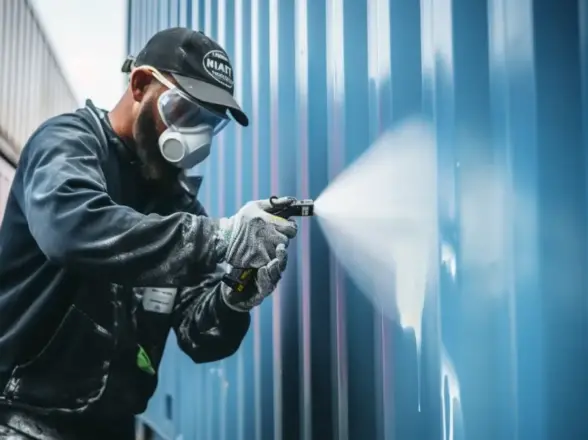
An airless sprayer is the recommended method for applying this direct-to-metal coating, though a brush, roller, or conventional sprayer can also be used. Choose the tool that gives you control over the container’s broad panels and smaller details.
A sprayer can apply one coat in about 30-40 minutes, but that is an application estimate, not total project time. It excludes preparation and drying, which add time to the job.
- Mask fixtures and other areas that should stay unpainted.
- Apply the coating in even passes with the recommended airless sprayer.
- Use conventional spray, a brush, or a roller if that better suits the job.
- Inspect the finish and touch up missed areas with a brush.
Move the sprayer at a steady pace and overlap each pass enough to avoid thin stripes. Watch panel edges and corrugations as you work, since their raised and recessed shapes can make an uneven finish easier to miss.
A brush or roller can be useful when a sprayer is not practical for the site or the task. Keep a brush available for edges and small missed areas.
Choose Suitable Weather and Allow Cure Time
Plan to paint in mild, dry weather, ideally between 50°F and 85°F with low humidity. Wait about 30 days before pressure washing a newly painted container so the coating can fully harden.
Allow 48 hours before touching or moving the container. Dry-to-touch paint is not ready for immediate heavy handling or washing, and rushing can mark or damage the finish.
Paint in mild, dry conditions
Metal exposed to scorching sun can get hot, which can affect how the coating behaves as you apply it. Wet or cold conditions can delay drying, so give each coat more time when the weather is uncooperative.
Use these conditions as a practical check before starting:
- Temperature within the 50°F-85°F range.
- Low humidity and dry conditions.
- Enough time for coats to dry between applications.
Let the coating cure before handling or washing
The 48-hour wait applies before touching or moving the container. Pressure washing needs a much longer delay: about 30 days gives the coating time to harden fully.
A newly painted surface can feel dry while remaining vulnerable underneath. Avoid treating that surface as ready for heavy handling, moving, or forceful washing. Follow the coating label if its cure instructions require a longer wait.
Maintain the Finish and Catch Rust Early
Inspect the coating once a year so you can repair small rust patches before they spread. Early attention helps you catch damage before it affects larger areas of the container.
Corten steel resists rust naturally, but that resistance does not replace a sound protective coating. Corrosion can set in as the original finish wears, especially where moisture collects or paint has failed.
- Look for rust patches on the container surface.
- Check for chips or peeling paint.
- Inspect welds and edges for staining or bubbling.
- Clear away standing water, mud, and overgrown plants.
Brown-orange stains and bubbles under paint are signs to investigate. Small surface spots can be treated with rust converter and matching touch-up paint before the damaged area grows.
Do not paint over new brown-orange staining or bubbling without first finding out what is happening beneath the finish.
Standing water, mud, and plants can keep moisture against the steel, so clear them away as part of your yearly check. Treat new brown-orange staining or bubbling as a prompt to investigate the coating rather than paint over it.
Conclusion
Repainting is a practical maintenance choice when the container is worth keeping and its steel still supports a sound finish. A well-prepared surface and a coating suited to the container’s exposure can help protect it through years of storage or other use.
Start with a close inspection. Identify bare or rusty areas, then measure the container before confirming how much paint you need. Inspect the surface and measure your container before choosing a coating and buying materials.
FAQ
What kind of paint do I use on a shipping container?
For most owners, use direct-to-metal acrylic formulated for exterior metal. It is practical to apply and offers good to very good durability with very good UV resistance. Epoxy can serve as a primer or intermediate coat, but outdoors it needs a UV-stable topcoat. Polyurethane suits jobs where stronger UV, color, and gloss retention justify its higher cost and harder application.
What is the average lifespan of a shipping container?
A container structure on land typically lasts 25 years or more, depending on climate, initial condition, and maintenance. Containers in ocean service usually work for about 10-15 years before retirement from shipping. Exposure and upkeep affect how long the structure remains useful, so the coating and steel condition matter when you assess a container for continued use.
How much does it cost to paint a 40ft shipping container?
Marine-grade paint costs about $50 per quart, but that price alone does not set the full project total. The final paint expense depends on container size, coating choice, preparation, and labor. The amount of repair needed can also shape the work involved, so inspect the steel and decide whether the project is DIY or paid labor before setting a budget.
Can you paint over the original container coating?
Yes, you can paint over the original coating if it is sound and clean. Remove loose paint and rust, then prime bare or rusted steel before applying the new finish. A DTM primer is for exposed metal and welds; it does not remove the need to prepare the rest of the container surface so the coating can adhere.
At Shipping Conex – Official Affiliate of Used Conex LLC, you can request a FREE quote today and discover the endless possibilities shipping containers offer for your storage needs. Simply complete our quick online form to take the first step toward transforming clutter into a secure, organized, and efficient storage solution.